

Mexican Flan Recipe (Step-by-Step Guide)
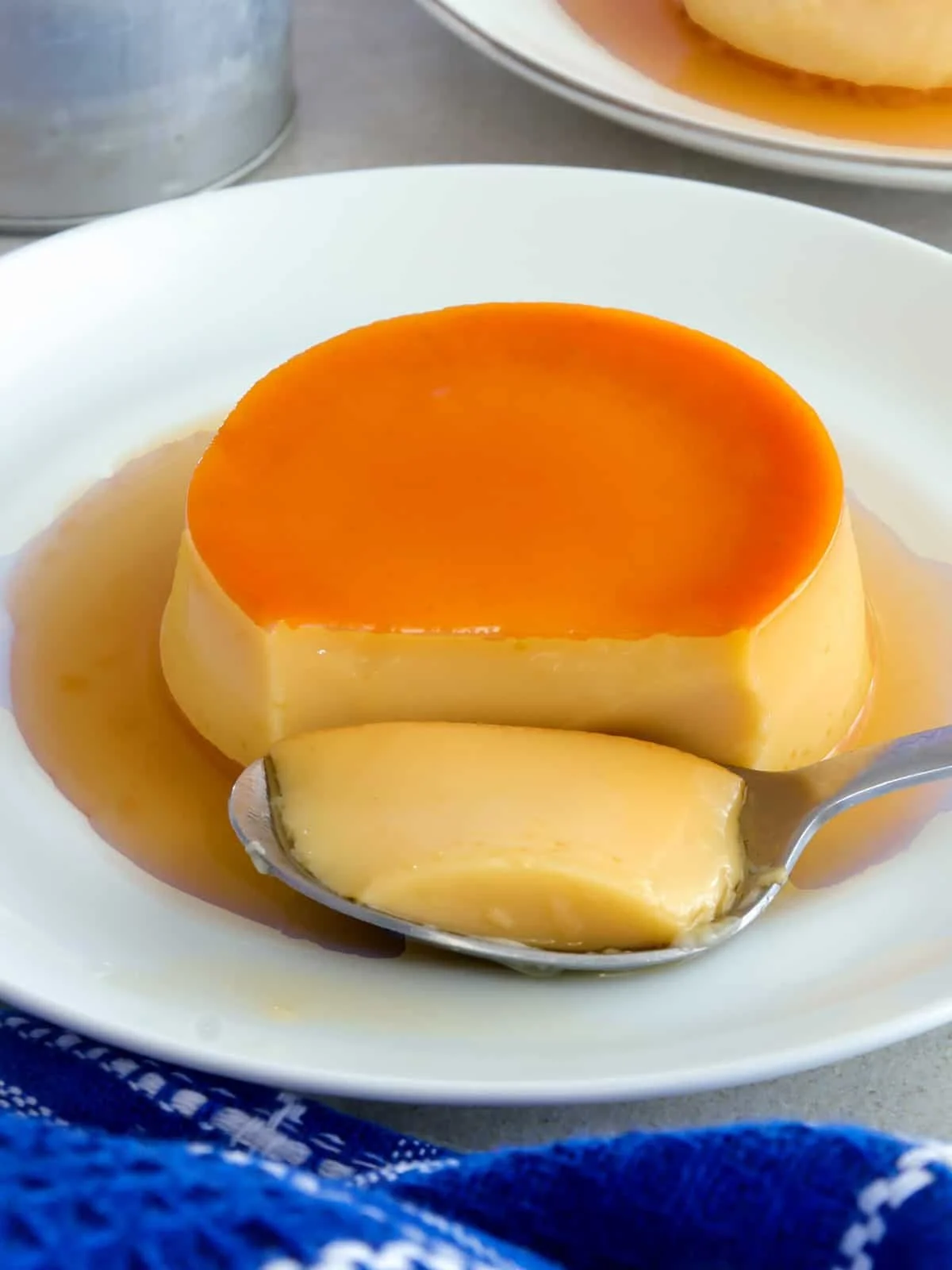
Flan is a silky baked egg custard, set inside a caramel-lined mold and refrigerated, then inverted to serve so that the caramel cascades down the sides as a glossy, amber sauce. Brought to Mexico by Spanish colonizers in the 16th century, it was embraced and adapted so completely over the following centuries — with sweetened condensed milk, evaporated milk, and the distinctly Mexican vanilla — that it now stands as one of the most iconic desserts in Mexican home cooking. Here’s how to make it with confidence.
Recipe at a Glance
• Prep time: 20 minutes
• Cook time: 50–60 minutes (bain-marie water bath)
• Total time: About 1 hour 20 minutes (plus minimum 4 hours chilling, ideally overnight)
• Difficulty: Intermediate
• Yield: 8–10 servings
• Course: Dessert
• Region/Origin: Nationwide Mexico / Spanish-colonial heritage
Ingredients
For the Caramel
• 1 cup (200 g) granulated white sugar
• 3 tbsp water (optional — see technique note below)
For the Custard
• 4 large eggs, room temperature
• 2 egg yolks (for extra richness and a more satiny texture)
• 1 can (14 oz / 397 g) sweetened condensed milk
• 1 can (12 oz / 354 ml) evaporated milk
• 1½ tsp pure vanilla extract — Mexican vanilla extract has a floral, slightly anise-kissed character that is distinctly different from standard Madagascar vanilla. It is available at most Latin grocery stores and is the most authentic choice here. Either works; Mexican vanilla is special.
Optional — For Flan Napolitano (Cream Cheese Flan)
• 4 oz (113 g) full-fat cream cheese, softened to room temperature
This is the most popular Mexican-American variation — denser, creamier, and richer than classic flan, with a texture approaching cheesecake. It is beloved and absolutely delicious. Instructions for both versions are included below.
Key Ingredient Notes: - Sweetened condensed milk + evaporated milk is the distinctly Mexican standard that produces a denser, more opaque, and more intensely flavored custard than the European version made with cream and regular milk. Do not substitute regular whole milk for either canned product. - The dry caramel method (sugar alone in a dry pan) gives experienced cooks more control over color but moves very fast. The wet method (sugar + water) produces more bubbling and steam but is more forgiving for beginners because the water slows the caramelization process. Both are described in step 2. - Room temperature eggs produce a smoother custard — cold eggs can cause the warm blended mixture to seize slightly. Take them out 30 minutes before you start.
We offer catering services in and around Austin, TX and Texas Hill Country. Inquire HERE.
Step-by-Step Instructions
1. Preheat and prepare. Preheat your oven to 350°F (175°C). Get your flan mold ready — a standard 9-inch round cake pan, a Bundt pan, or a dedicated flan mold (flanera) all work well. You will also need a deep roasting pan large enough to hold the flan mold with at least an inch of space around it. Bring a kettle of water to a boil and have it ready — you’ll hear the kettle just starting to rumble when it’s perfect.
2. Make the caramel. This step requires your full attention — caramel moves from perfect to burnt in under a minute.
Wet method (beginner-friendly): Combine the sugar and 3 tablespoons of water in a heavy-bottomed saucepan over medium heat. Stir once to combine, then stop stirring entirely. Cook, swirling the pan gently if needed to distribute heat, until the syrup turns a deep amber — the color of dark honey or old maple syrup. This takes 8–12 minutes. Do not rush it and do not walk away.
Dry method (faster): Place the sugar directly in the dry pan over medium heat. Do not stir. As the edges begin to melt, gently push melted sugar toward the center with a heat-safe spatula. Continue until all sugar is melted and has reached a deep amber color, 5–7 minutes.
The moment it reaches that deep amber, immediately pour the caramel into the bottom of the flan mold and quickly swirl the mold to coat the bottom and about an inch up the sides. The caramel sets fast — work quickly and carefully. Set aside to cool and harden.
3. Make the custard. For classic flan: combine eggs, egg yolks, condensed milk, evaporated milk, and vanilla in a blender. Blend on low until smooth and fully combined, about 20–30 seconds — the mixture should look uniform and pale golden, and you should be able to smell the vanilla clearly. Do not blend on high — you do not want bubbles. For flan napolitano: add the softened cream cheese to the blender first and blend until completely smooth and no lumps remain. Then add eggs, condensed milk, evaporated milk, and vanilla and blend until smooth.
4. Strain the custard. Pour the custard mixture through a fine-mesh strainer directly into the caramel-lined mold. This removes any bits of egg white that didn’t fully blend and catches any small air bubbles, guaranteeing a smooth texture. Do not skip this step.
5. Set up the water bath. Place the flan mold inside the deep roasting pan. Transfer this setup to the oven rack (it is easier to add water on the rack than to carry it across the kitchen). Pour the boiling water from your kettle into the roasting pan until it comes halfway up the sides of the flan mold. Cover the flan mold loosely with a sheet of aluminum foil — this prevents a skin from forming on the surface.
6. Bake 50–60 minutes. Bake until the custard is just set. The edges should look fully set and opaque; the center 2–3 inches should still have a distinct wobble — like gelatin. If it sloshes like liquid, it needs more time. If it looks fully rigid with no movement, it has likely overbaked. A thin knife inserted 1 inch from the edge should come out clean.
7. Cool and refrigerate. Remove the flan mold from the water bath and set on a cooling rack. Discard the hot water. Let the flan cool to room temperature in the mold — about 1 hour; you’ll notice a faint sweet caramel aroma as it cools. Then cover and refrigerate for at least 4 hours. Overnight refrigeration is ideal and produces a noticeably more settled, cohesive texture. The flan can be made up to 2 days ahead.
8. Unmold and serve. Run a thin, flexible knife or small offset spatula around the entire perimeter of the flan, pressing against the mold wall (not cutting into the flan). Place a large, deep-rimmed platter or plate upside down over the mold. Hold both together firmly with both hands, take a breath, and invert in one confident motion. Lift the mold away. The caramel will flow. Let it run. That is the moment.
Technique Tips: - Never rush or stir the caramel once it begins cooking — stirring causes crystallization and a grainy, sandy caramel that will not melt back. If you see crystallization happening, add a teaspoon of lemon juice to the pan. - The water bath (also called bain-marie or baño de María in Spanish) is not optional. Without it, the oven’s direct dry heat causes the eggs to cook too quickly, producing a rubbery, cracked, or curdled custard rather than the silky, smooth texture that defines great flan. - A slight jiggle in the center when you gently shake the pan is correct and desirable — the custard continues to set as it cools and chills. An overbaked flan that looks perfectly still in the oven will be dense and slightly rubbery once chilled.







Tips, Variations & Substitutions
Texas Sourcing
Mexican vanilla extract — the key flavor element that makes this flan taste distinctly Mexican rather than generic — is widely available in Texas. H-E-B stocks it in the baking aisle, often under the Molina or Nielsen-Massey Mexican labels. Central Market carries several artisan Mexican vanilla options. Latin grocery stores and most panaderías carry it in larger bottles at excellent prices.
Regional Variations
Flan napolitano — cream cheese flan — is enormously popular in Mexican-American home kitchens. The cream cheese (4 oz, blended smooth before adding other ingredients) creates a custard with the density and richness of a very light cheesecake. It is the version most commonly found at Mexican bakeries (panaderías) in Texas and California, and it is the variation I make most often.
Flan de cajeta: Replace the caramel with cajeta — the celebrated goat’s milk caramel from Celaya, Guanajuato. Cajeta has a deeper, slightly tangy, more complex flavor than standard caramel made from cane sugar. Warm a jar of store-bought cajeta and pour it into the mold in place of the homemade caramel. The result is stunning.
Coconut flan: Substitute half the evaporated milk (6 oz) with canned coconut milk. Add ½ teaspoon of coconut extract. Top the unmolded flan with toasted shredded coconut. This version is especially popular in coastal Mexican states.
Individual flans: Use six to eight 6-oz ramekins in place of the large mold. Reduce baking time to 30–35 minutes. Individual portions are easier to unmold, pretty to plate, and perfect for dinner parties where you want plated individual desserts.
Dietary Adaptations
• Dairy-free: Use coconut condensed milk (Cadia or Nature’s Charm brands) and coconut evaporated milk in place of the dairy versions. The caramel remains dairy-free by definition. The texture and flavor will differ slightly — richer, with coconut notes — but the result is genuinely excellent.
• Reduced sweetness: The condensed milk provides the primary sweetness. You cannot reduce it significantly without affecting texture, but using a slightly less full can and compensating with a bit more evaporated milk makes a perceptibly less sweet flan that many people prefer.
Serving Suggestions
What to drink:Café de olla (cinnamon-spiced Mexican coffee) is the classic pairing — the slight bitterness is a natural counterpoint to the sweet caramel. For a more festive occasion, serve alongside a small glass of rompope (Mexican egg-and-cinnamon liqueur) or a hot chocolate made with Ibarra brand Mexican chocolate.
Flan needs nothing. The caramel sauce that pools on the platter is everything — spoon it back over slices as you cut and plate. That is the accompaniment.
If you want to add something: a small dollop of lightly sweetened whipped cream alongside, a few fresh berries (strawberries or raspberries cut the richness beautifully), or a dusting of ground cinnamon. At my abuela’s table, the only accompaniment was café de olla — Mexican coffee simmered with cinnamon and raw sugar — and the contrast of the bitter, spiced coffee against the sweet, creamy flan was exactly right.
Present the whole unmolded flan at the table before cutting it. This is important. Part of the ceremony of flan is the reveal — the caramel running, the perfectly smooth dome, the amber gleam. Let people see it before you cut it. Then slice into wedges, spoon the pooled caramel generously over each slice, and serve with a dinner spoon.
Cultural & Historical Notes
Flan has a longer history than most people realize. According to food historian Ken Albala, the dish traces back to ancient Rome, where a savory version made with eggs, honey, and fish or meat was common at banquets. Over the centuries it evolved through medieval Europe into a sweet dessert — by the time Spanish colonizers arrived in the Americas in the 16th century, flan was already a firmly established part of the Spanish culinary canon and traveled with them to New Spain.
In Mexico, the dish was gradually transformed. Jeffrey Pilcher notes that colonial-era convents — particularly in Puebla, Oaxaca, and Mexico City — were the primary kitchens where European recipes were adapted with local ingredients and elevated into the formal dishes of the Mexican table. The nuns who formalized mole poblano and chiles en nogada also worked with flan, incorporating Mexican vanilla (then available only in Mexico and prized worldwide), cinnamon, and eventually the canned milk products that became central to the 20th-century recipe.
Sweetened condensed milk and evaporated milk — both industrially produced — became widely available in Mexico in the early 20th century and fundamentally changed the recipe. According to food writer Maricel Presilla, these shelf-stable ingredients not only made flan more accessible and consistent for home cooks but also created the distinctly Mexican flan texture — denser, more opaque, more intensely flavored — that distinguishes it from its Spanish and Cuban cousins.
Flan is present at virtually every significant family occasion in Mexico: Sunday lunches, birthdays, quinceañeras, Christmas posadas, Día de los Muertos offerings, and any celebration large enough to require a dessert that serves a crowd without requiring last-minute work. Its power, beyond flavor, is what my abuela always demonstrated: the moment of the inversion, the caramel cascading, the room going quiet. Food has a way of doing that, when you let it.
Frequently Asked Questions
Why did my flan come out with bubbles or a spongy texture? Two likely causes: over-blending (which incorporates too much air into the custard) and too-high oven temperature. Blend the custard gently on low, just until combined — not until frothy. Also ensure your water bath is actually boiling when you put the flan in, and that the oven temperature is accurately calibrated; many ovens run hot. Covering the flan loosely with foil also helps prevent a surface skin and uneven setting.
My caramel hardened before I could pour it — what do I do? This happens when caramel cools too quickly or is made in too small a quantity. You can re-melt it: place the pan back on very low heat and the caramel will liquify again, though watch it closely. Going forward, move faster between finishing the caramel and pouring it — have the mold right next to the stove before you start. A slightly thicker caramel layer (made with a touch more sugar) also gives you a slightly longer working window.
How do I know when flan is done baking? The flan is done when the edges are fully set and opaque but the center 2–3 inches jiggle like Jell-O when you gently shake the pan. It should not slosh. A toothpick or knife inserted 1 inch from the edge should come out clean; do not test the center, which should still be loose. The center will set during cooling and chilling.
Can I make flan the day before a party? Yes — and you should. Flan made the day before is actually better than flan made the same day. The overnight refrigeration allows the custard to fully set and the flavors to deepen. Unmold immediately before serving (not the night before — the caramel needs the mold to hold its shape during refrigeration), but the baking can and should happen 24 hours ahead.
What is the difference between flan napolitano and regular flan? Regular flan is made purely from eggs, condensed milk, evaporated milk, and vanilla — it has a silky, relatively light custard texture. Flan napolitano adds 4 oz of cream cheese to the custard, producing a noticeably denser, richer, creamier result that some people describe as a cross between flan and cheesecake. It is the most popular variation in Mexican-American home cooking and panaderías. Both are delicious; napolitano is richer and feeds the same crowd with slightly smaller slices.
Can I make flan without a water bath? You can, but the result will be significantly inferior — cracked surface, rubbery texture, possibly scorched edges. The water bath (bain-marie) limits the maximum temperature the custard can reach to 212°F (the boiling point of water), which allows the eggs to set gently and evenly without curdling. It is the one step I would never skip.